SEO
SEO
 Web Design & Development
 Google Ads
 Social Media Ads
 App Design & Development
 Lawyer
 Tradies
 E-commerce



 June 26, 2026
If you’re investing time and money into marketing, understanding marketing ROI is one of the clearest ways to know if it’s actually working.
Whether you’re running Google Ads, publishing blog content, managing social media, or sending email campaigns, every activity has a cost. ROI helps you measure whether that spend is generating enough return to justify it.
For businesses trying to grow, this matters. Without a clear view of ROI, it’s easy to keep spending on channels that look busy but don’t produce much.
In this guide, we’ll break down what ROI means in marketing, how to calculate it, and why it plays such a big role in making smarter business decisions.
What Is ROI in Marketing?
ROI stands for return on investment.
In marketing, it measures how much revenue or profit you earn compared to what you spend on marketing.
The basic idea is simple.
If you spend $1,000 on a campaign and it brings in $5,000 in sales, your ROI shows whether that investment was worth it.
The formula looks like this:
ROI = (Revenue – Cost) ÷ Cost
For example:
If you spend $2,000 and generate $8,000:
($8,000 – $2,000) ÷ $2,000 = 3
That means a 300% return.
This is one of the most practical ways to judge whether your marketing efforts are helping the business grow.
Why Marketing ROI Matters
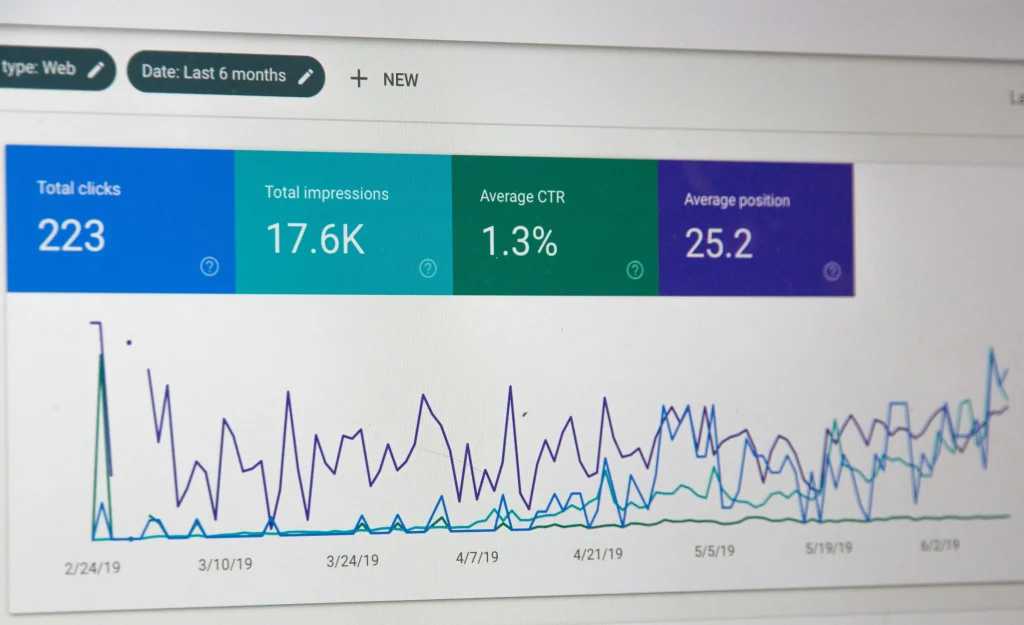
A lot of businesses track clicks, impressions, and followers.
Those numbers can be useful, but they do not always tell you if your marketing is making money.
That’s where ROI becomes important.
It helps answer questions like:
- Which channel is bringing the best return?
- Where should you increase your budget?
- Which campaigns are underperforming?
- Is your current strategy sustainable?
Without measuring ROI, marketing decisions often rely on guesswork. For small businesses especially, that can lead to wasted budget.
A clear ROI helps you focus on what’s actually driving growth.
How to Calculate Marketing ROI
The simplest way to calculate marketing ROI is by comparing the money earned against the money spent.
But to do this properly, you need to know your full costs.
This may include:
- ad spend
- agency fees
- software subscriptions
- content production
- staff time
- design costs
For example:
A business spends:
- $3,000 on Google Ads
- $500 on landing page design
- $500 on copywriting
Total spend = $4,000
That campaign generates $12,000 in sales.
ROI:
($12,000 – $4,000) ÷ $4,000 = 2
That’s a 200% ROI.
The clearer your cost tracking, the more accurate your ROI will be.
What Counts as a Good ROI?
This depends on your industry, margins, and business model.
A campaign with a 100% ROI may be strong for one business and weak for another.
Generally:
- 0% ROI means you broke even
- Positive ROI means profit
- Negative ROI means you lost money
But ROI should not always be judged in isolation.
For example, a brand awareness campaign may not convert immediately, but it can improve future conversions.
That’s why context matters.
Which Marketing Channels Usually Deliver Strong ROI?

Different channels perform differently depending on your audience. But some common channels often produce reliable returns.
SEO
SEO can have one of the strongest long-term returns because once content ranks, it can keep bringing traffic without ongoing ad spend.
The trade-off is time.
It usually takes months to build momentum.
Google Ads
Paid search can generate fast leads, especially for service-based businesses.
ROI often depends on targeting, landing page quality, and conversion tracking.
Email Marketing
Email usually performs well because it targets people who already know your brand.
It’s often cheaper than paid ads and can generate repeat sales.
Social Media
Social ROI can be harder to measure directly.
Some campaigns drive sales. Others mainly build awareness.
It depends on your goals.
Common Mistakes When Measuring ROI
A lot of businesses think they’re measuring ROI properly when they’re missing key parts of the picture.
Some common mistakes include:
Tracking vanity metrics
Likes, shares, and traffic can look positive but may not lead to sales.
Ignoring full costs
If you only count ad spend and ignore labour or production costs, ROI can look inflated.
Looking at short-term results only
Some channels, like SEO, compound over time.
Judging too early can lead to bad decisions.
Not using proper attribution
Customers often interact with multiple touchpoints before converting.
If your tracking is weak, you may credit the wrong channel.
How to Improve Your Marketing ROI
Improving ROI usually starts with better clarity. Not necessarily bigger budgets.
Here are a few practical ways:
Focus on higher-intent traffic
People searching for solutions are often closer to buying than casual browsers.
Improve conversion rates
More traffic doesn’t always mean better ROI.
Sometimes improving your landing pages can lift results without increasing spend.
Cut underperforming channels
If a channel consistently drains budget without results, it may be worth reducing.
Strengthen your tracking
Good data leads to better decisions. Without it, ROI becomes harder to trust.
Invest in long-term assets
SEO, email lists, and content can continue producing results well after the initial investment.
Why ROI Matters More Than Ever
Marketing costs have gone up across almost every channel.
Competition is stronger, ad prices are rising, and customer attention is harder to win.
That makes ROI more important than ever.
Businesses that understand their numbers can make faster, smarter decisions. They know what’s working, what’s wasting the budget, and where to scale.
Ready to Improve Your Marketing ROI?
Marketing can feel like a constant balancing act. Between managing campaigns, tracking performance, creating content, and keeping up with changing platforms, it’s easy to lose sight of what’s actually delivering results.
The challenge is not doing more. It’s knowing where your budget is working hardest and where it’s being wasted.
With the right strategy, better tracking, and clearer data, improving your marketing ROI becomes much easier. It gives you the confidence to invest in the channels that are driving real business growth.
At Ostenpowers, we help businesses make smarter marketing decisions by focusing on performance, not guesswork. If you’re ready to improve your results and build a strategy around measurable growth, browse our portfolio or get in touch with our team today.